Lunch in the officer’s mess
A vegetarian feast at the the former Tai Po police station

Lunch in the officer’s mess
A vegetarian feast at the the former Tai Po police station
On April 16, 1899, much to the chagrin of local residents, the British raised the Union Jack on Flagstaff Hill, Tai Po, formally taking possession of all the land to the south of Shenzhen. At that time, the area was entirely rural. Villages and farms were connected by a network of footpaths, but the main population centres were around the market towns of Yuen Long in the west and Tai Po to the east.
Villagers from across the region launched a spirited rebellion that lasted six days and raged from east to west, but in the end, they were hopelessly out-gunned. Flagstaff Hill became the police headquarters for the whole of what would become known as the New Territories. In 1949, it was relegated to divisional HQ and continued to serve until it was finally closed down in 1987.
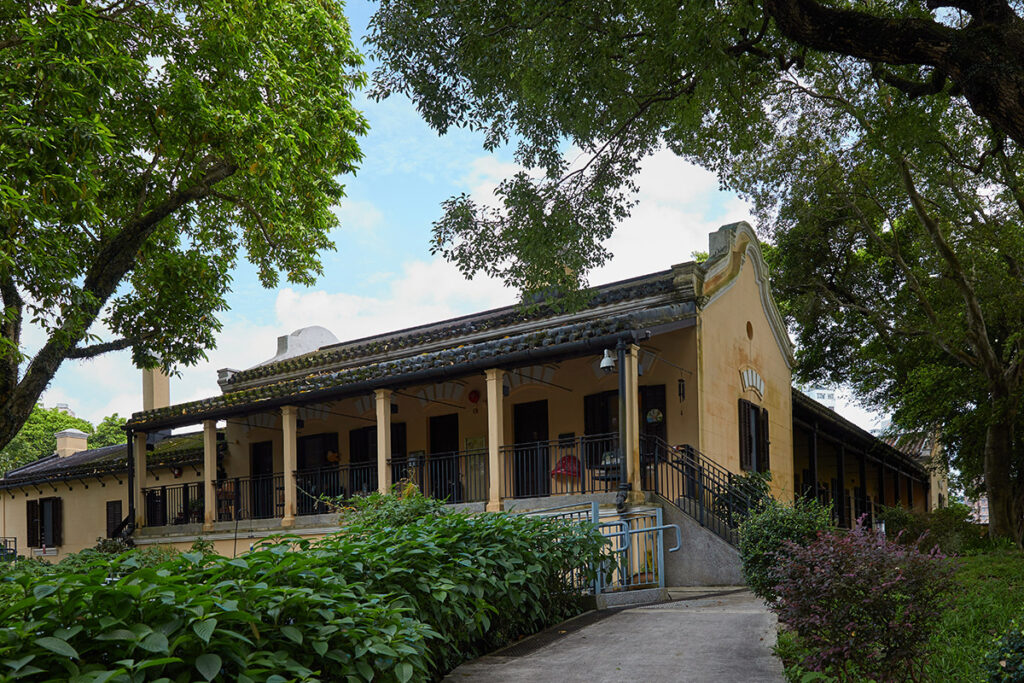
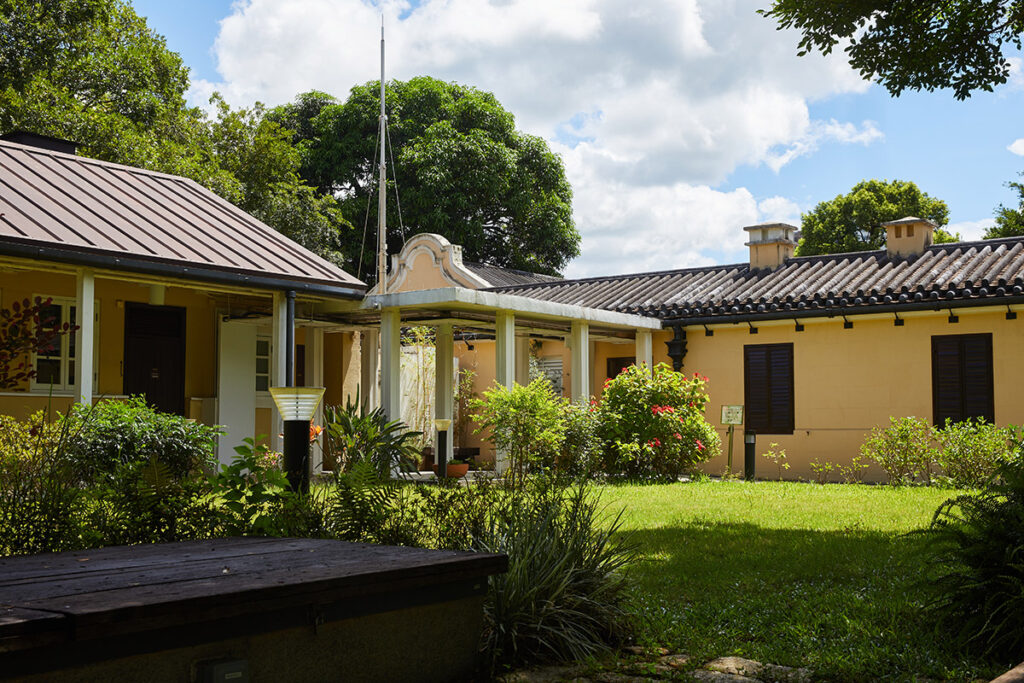
Inside and outside of the police museum
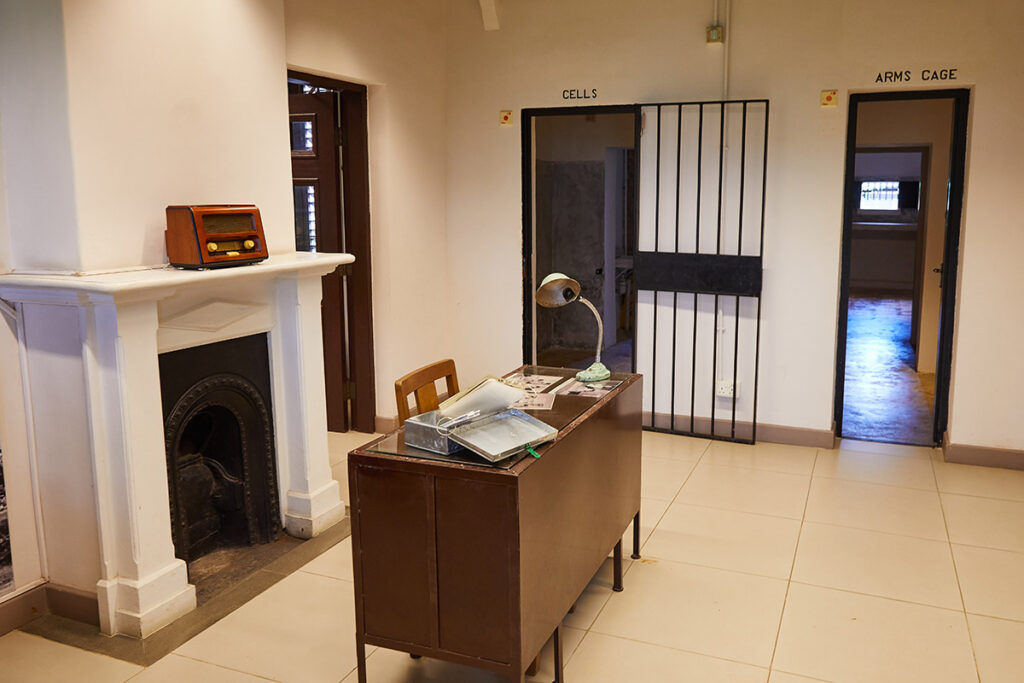
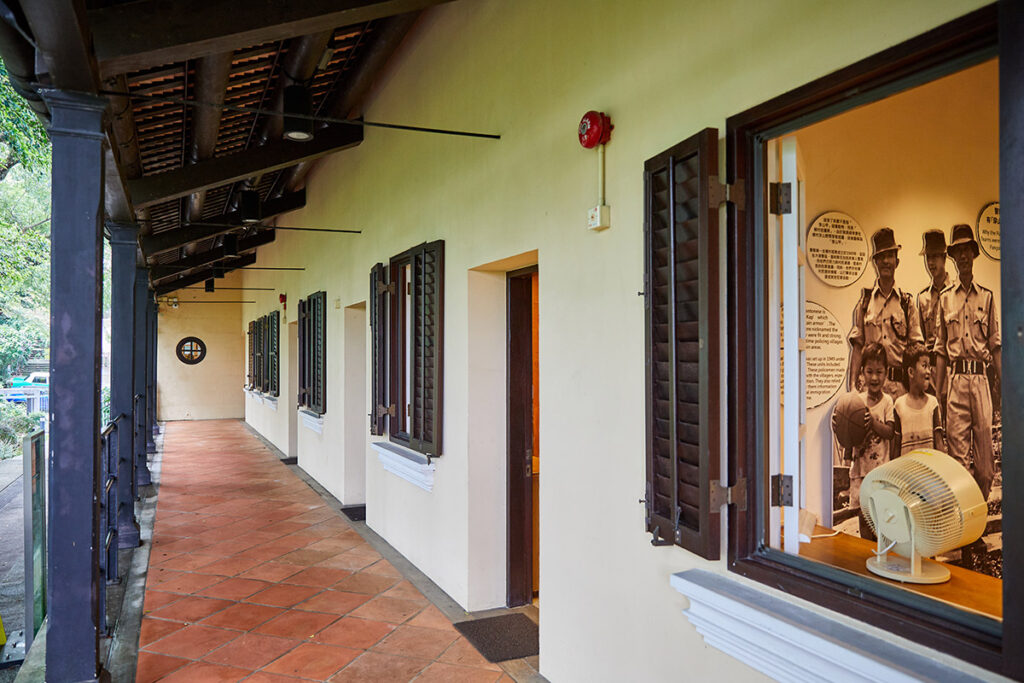
But the old buildings, the police station itself, the canteen block, and staff quarters still stand. They are now known as the Green Hub and are operated by Kadoorie Farm. Together they form a fascinating museum. Visitors can explore the cells and the armoury and get an idea of everyday police life in the early twentieth century.
The flagpole that stands today, just to the right of the entrance, is not the original. Its top is now mostly hidden by trees, but it does stand on the original location, and there are two stone cannon placements on either side. The wooded slope that tumbles down below is now an egret nursery.
Eat Well Canteen
The former police officer’s mess is now a vegan-friendly café called the Eat Well Canteen. The ethos of the canteen is that food should not only be healthy but also be community and environmentally friendly. Most of the items on the menu are made with ingredients that are sourced locally, including from the Hub’s very own herb garden.
The canteen opens at 10.00 am, at which time you can indulge in a breakfast of raw granola with tofu yoghurt or organic soy milk, along with a coffee or soy latte.
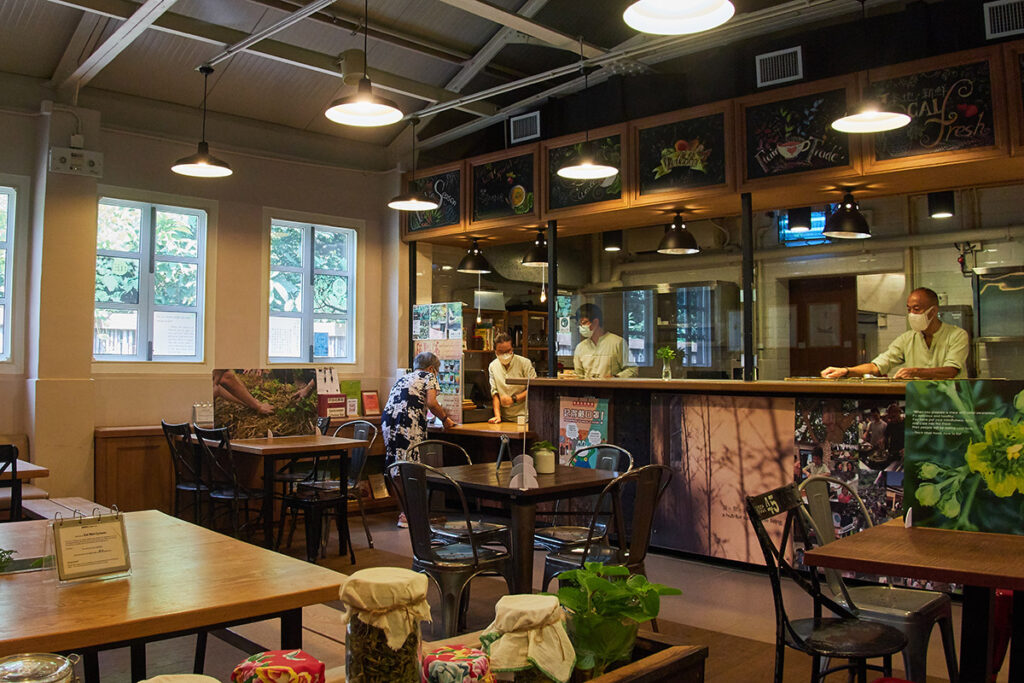
The Eat Well Canteen has a simple but pleasant ambience and serves vegan food
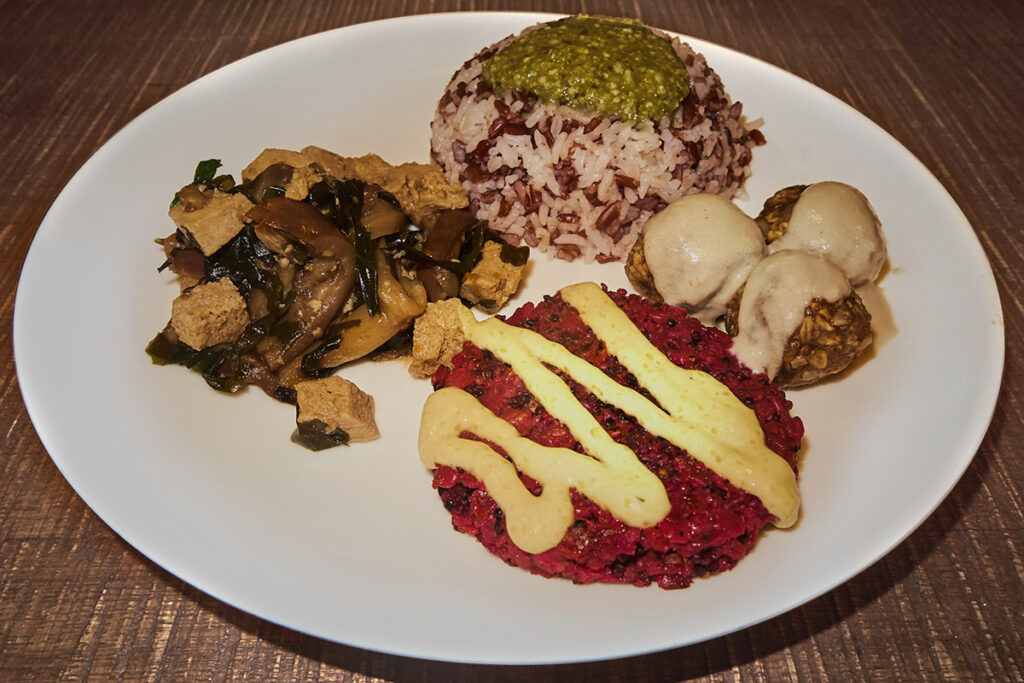
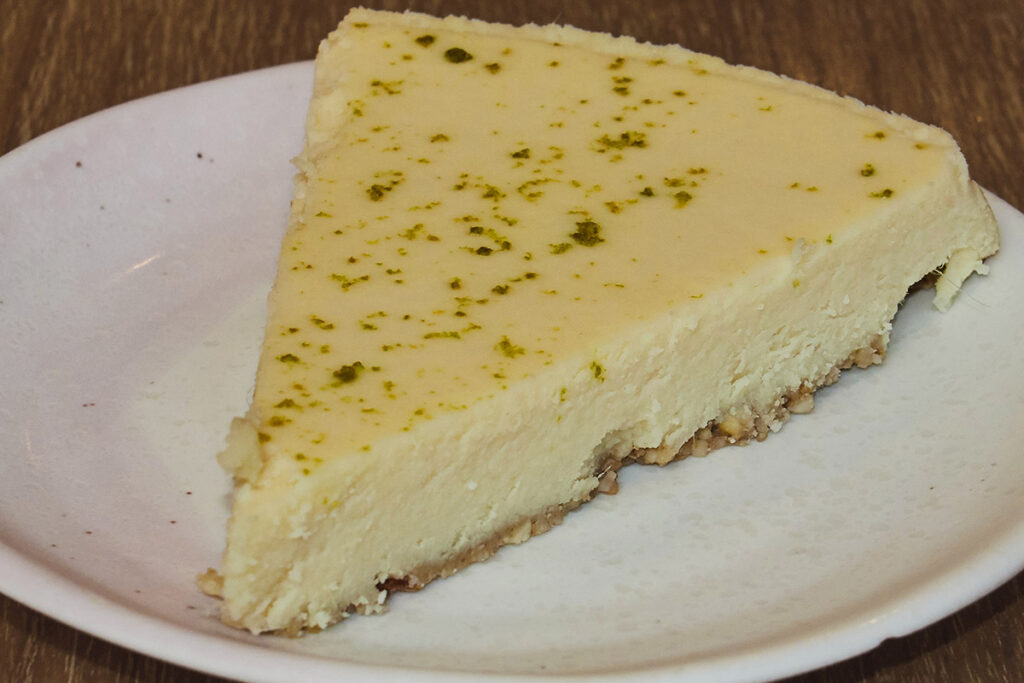
The lunch menu takes over at 12:00 and is available throughout the afternoon. The menu varies according to what is in season, but there are around 15 dishes to choose from. Pricing is based on how many dishes you choose; the more you indulge, the less you pay for each dish.
First onto my plate was the red and white rice with pesto and chives. I was sorely tempted by the option with spicy mixed seeds, maybe next time. I have it on good authority that the warm millet salad is worth investigating as well.
To the rice, I added frozen tofu with kelp. The tofu was, of course, no longer frozen, and it was mixed with strips of eggplant and sesame seeds. Nutty vegan meatballs are a mix of crushed nuts topped with a delicious mushroom sauce. I rounded the pate off with a beetroot and quinoa burger topped with a tangy sauce that betrayed hints of mustard but I wasn’t quite sure.
Another option was the beetroot with herbs and green lentils, but that was too much for me to eat at lunchtime. Besides, I was keen to try one of the desserts, which are sold separately. I’ve had the tofu yoghurt topped with dried fruits and seeds before, and I know that to be good. There are a few other options, but for me, it was an agonising choice between the spicy raw chocolate cake and the raw lime and ginger pie. I went for the latter. It was excellent, sharp with just the right amount of gingery bite. I rounded off with an organic coffee, black, no sugar, which is how I like it. There are also a number of tea and cold drink options.
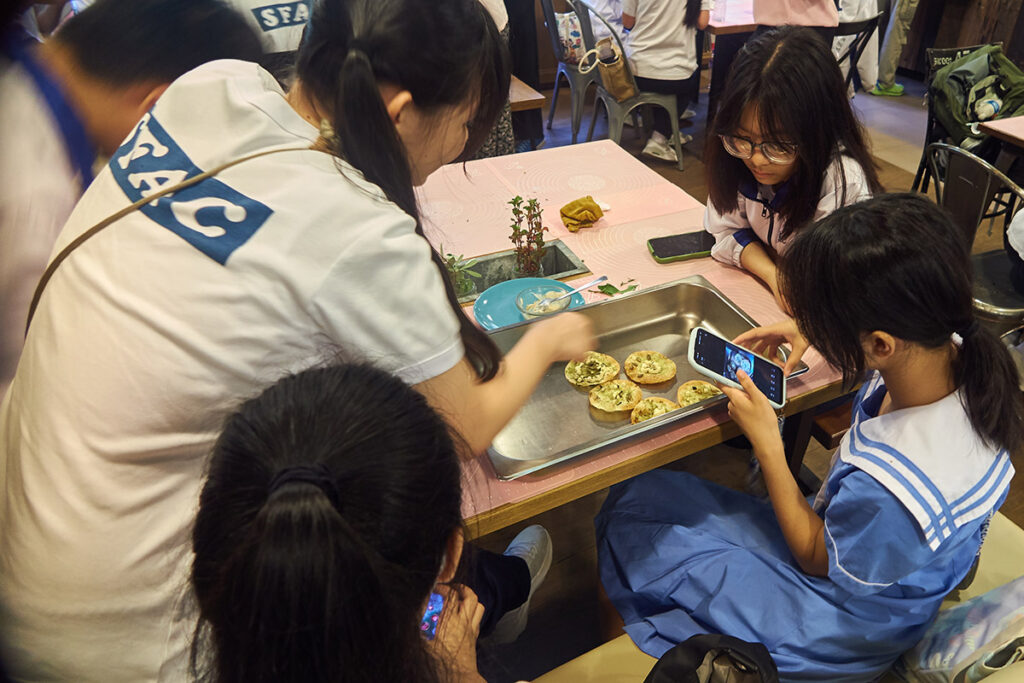
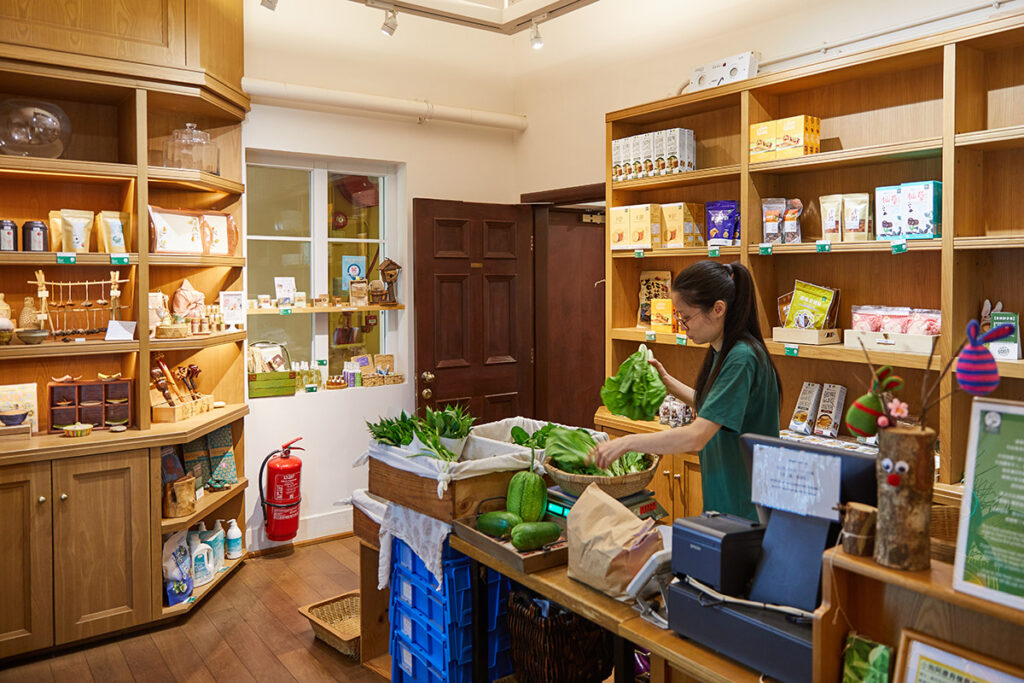
Students learn about sustainable living and how to make vegan pizza (left). Organic produce and local crafts in the shop
But the Green Hub is much more than just a museum and cafeteria. It also holds workshops for adults and children on sustainable living as well as cookery classes, including both day classes and residential courses. The original police officer’s quarters have been converted to guest rooms for those attending residential courses, and there is also a training room that can be hired by charities, schools and other educational institutions.
There is also a shop that sells organic products, local crafts and a small farmer’s market that sells produce grown at Kadoorie Farm.
The museum, shop, and Eat Well Canteen are open every day except Tuesdays from 10:00 to 17:00 (last order at 16:30). Reservations are not available.
Salt, Fish and the Battle of Tai O Bay
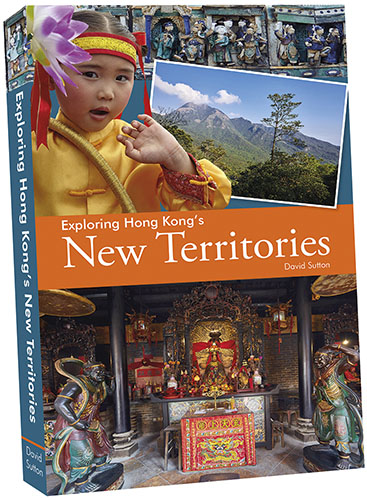
Exploring Hong Kong’s New Territories
The New Territories represents around 85% of Hong Kong’s total land area. It is an area of coastal wetlands and mountains boasting a history of more than a thousand years. There are many ancient monuments, well-maintained hiking trails and outlying islands with old fishing communities. Yet to most visitors, it remains largely unknown.
I spent the Covid years researching, writing and photographing it. Exploring Hong Kong’s New Territories is 332 pages with around 400 colour photographs plus maps and directions. More information here