Dapeng Ancient City
A 600-year-old fort near Shenzhen
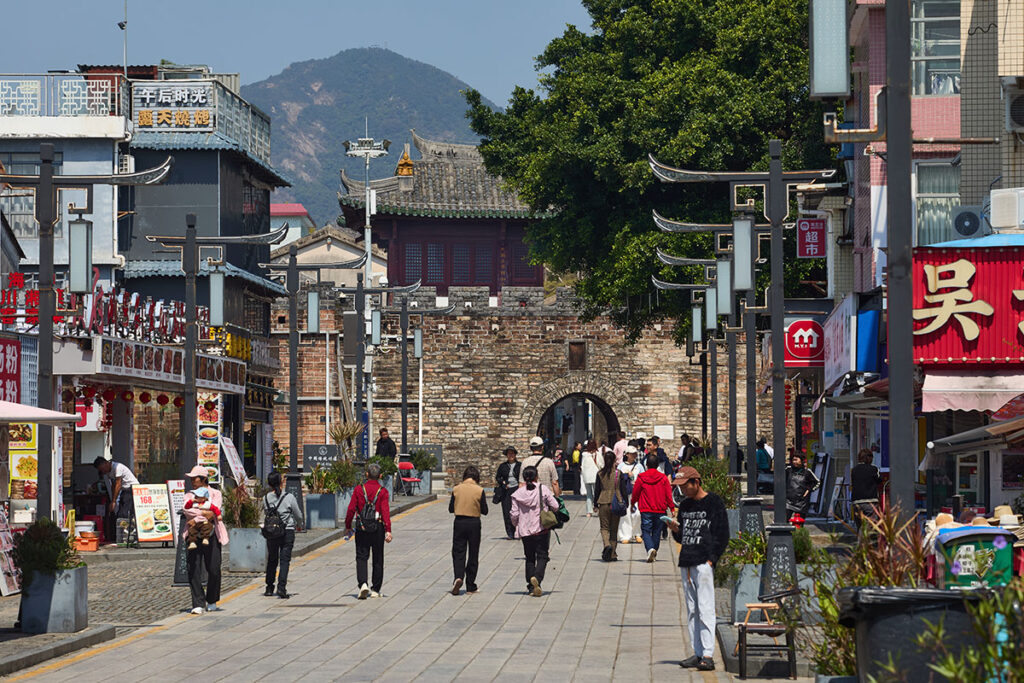
Dapeng Ancient City
A 600-year-old fort near Shenzhen
I recently billeted myself at Dapeng Fortress, a 600-year-old garrison on a small peninsula just to the east of Hong Kong. It is actually part of Shenzhen but about 50 kilometres from the city. I was lodged at the Buyan Inn, one of several small hotels within the fort’s precinct, most of which were built about 200 years ago. The Buyan was once the mansion of Lai Enjin, the younger brother of General Lai Enjue. Enjin held no military rank, but the older sibling is a significant figure in the history of the area.
Dapeng was founded in 1394 to defend against piracy and smugglers. In 1571, it withstood a determined and well-organised 40-day siege by Japanese pirates. At the beginning of the eighteenth century, it was upgraded to become the Dapeng Marine Master Camp, the headquarters for several strongholds built along the coasts of southern China.
Other forts included: Nantou, which was built the same year on the western side of modern Shenzhen; Tung Chung Fort on north Lantau coast was first established at the latter end of the twelfth century specifically to combat the smuggling of salt; and Kowloon Fort, originally a small military outpost set up to manage the salt trade, it grew into a coastal fort around 1810 and became the most infamous of all. Kowloon Fort was the site of the Battle of Kowloon. widely regarded as the first battle of the Opium Wars, in which Lai Enjue was directly involved.
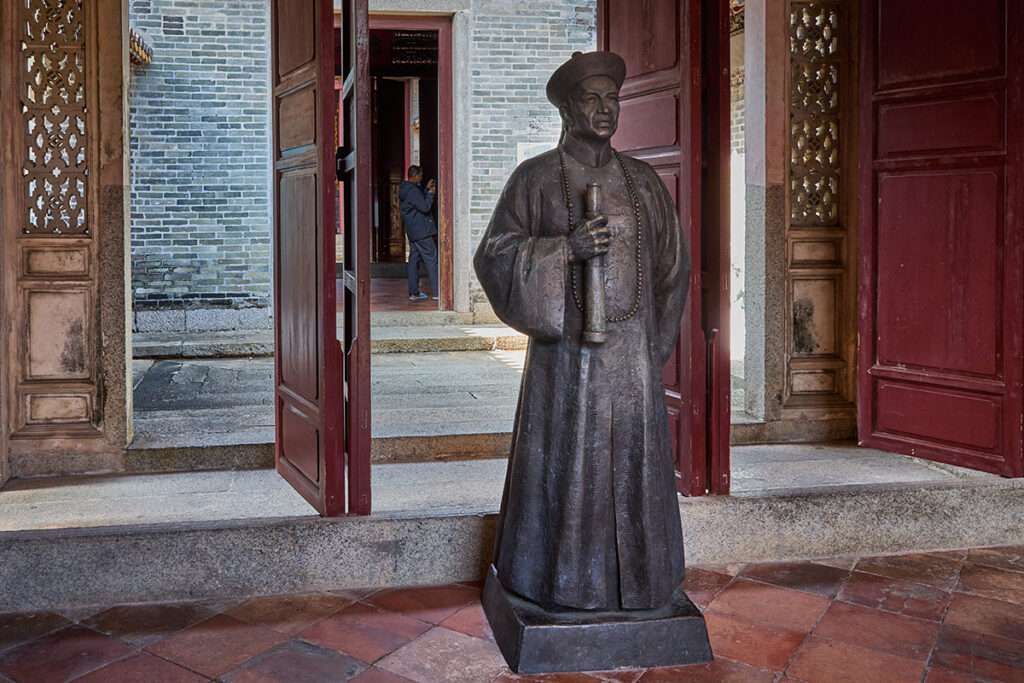
Statue of Lai Enjue in his manison
By the summer of 1839, relations between the British and Chinese were at a low point after Lin Zexu, the Imperial Commissioner appointed by the Emperor to eradicate opium importation, had dunked some 20,000 chests of raw opium into the Pearl River estuary. Things plummeted further after a group of drunk British sailors got into a brawl with villagers in Tsim Sha Tsui, leaving one villager dead.
After the British refused to hand over the culprits for trial, Lin cut food supplies to their ships and community in Macau. By early September, the hungry Brits, led by Chief Superintendent Charles Elliot, sent a flotilla to Kowloon Fort to demand that the sanction be lifted. When the negotiations failed, they opened fire on the Chinese war junks.
At the time, Lai Enjue was a Deputy Regional Commander from the Dapeng. He rallied his forces quickly and returned fire, eventually forcing the British to retreat. The skirmish is regarded as the opening battle of the First Opium War. Thanks to his leadership and quick thinking, he rose rapidly through the ranks and was appointed Admiral of the Guangdong Navy in 1843.
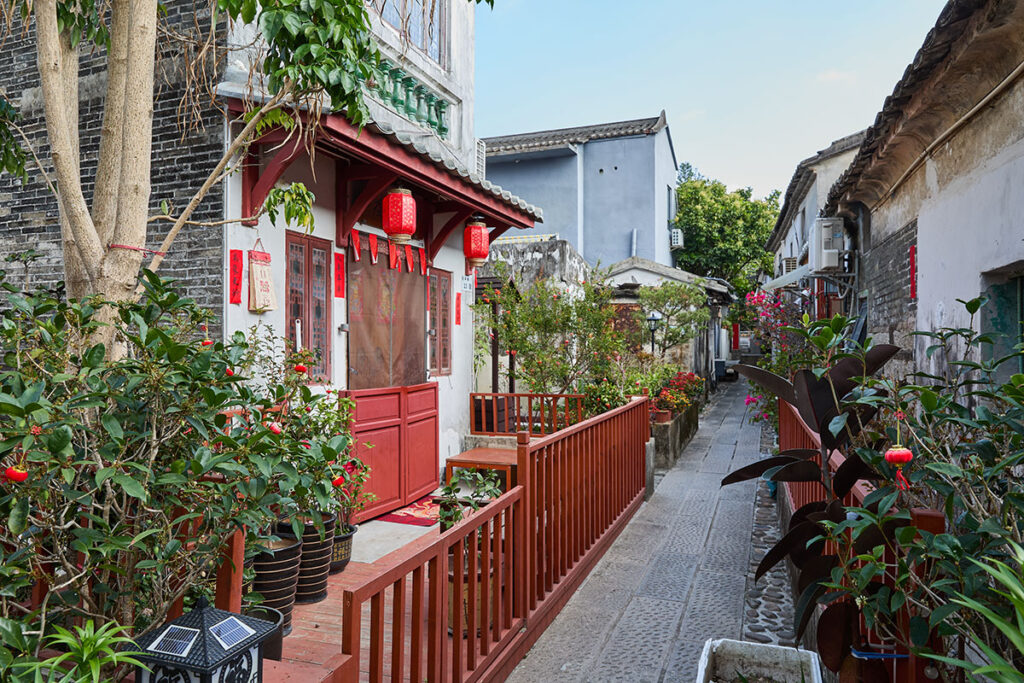
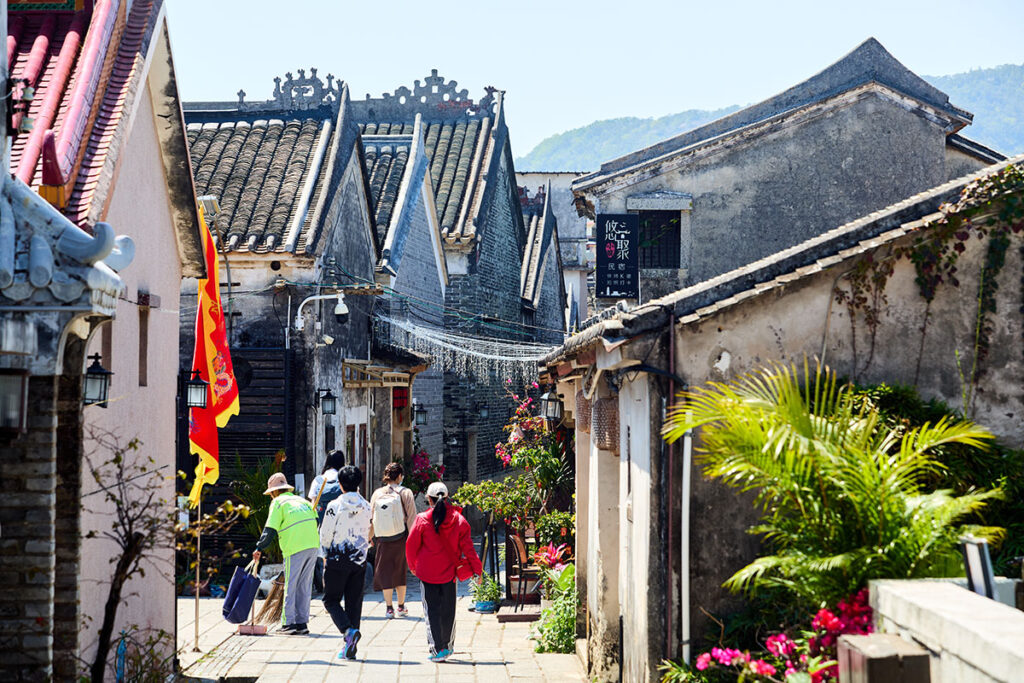
Exploring the streets and alleys of Dapeng
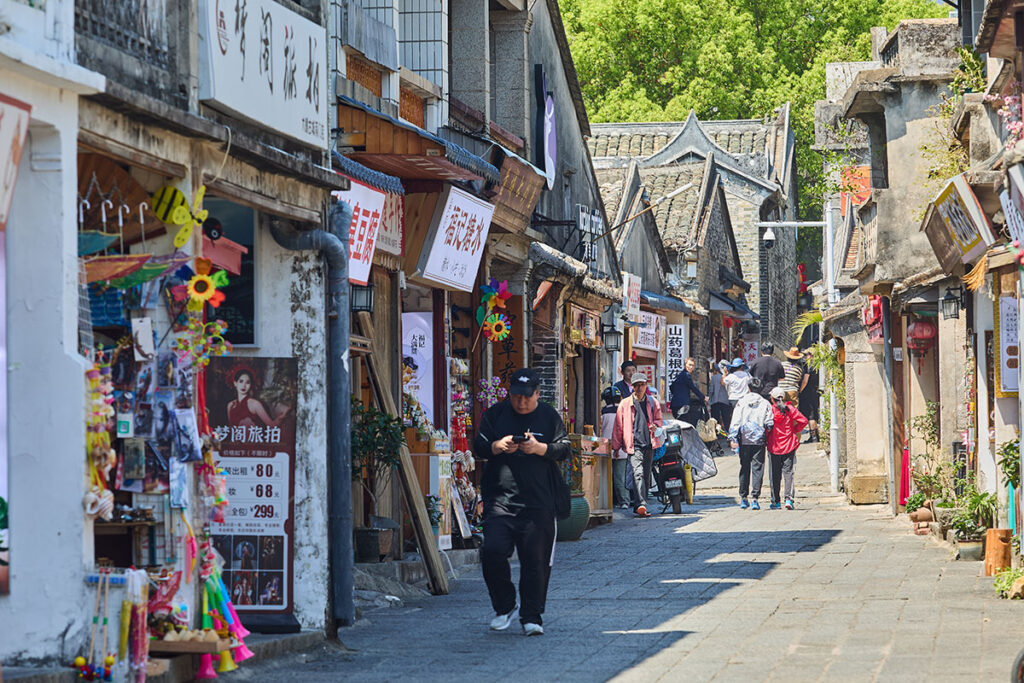
Lai Enjue’s residence in the fortress, the Zhenwei General’s Mansion, is open to the public and is one of the finest examples of southern Chinese style. Built in 1843, it is a sumptuous abode with over 40 rooms and courtyards and a plaque above the entrance inscribed by the Emperor.
There are numerous other fine buildings, from mansions to more humble dwellings, many of them still occupied. Near the north gate, at the site of the original command post, there is a wishing tree festooned with red ribbons bearing the aspirations of the people who threw them there.
The main arteries of the village are lined with shops selling souvenirs, snacks, and restaurants to tempt visitors. There are laid-back coffee shops, boutiques, and fortune tellers. But despite this, the mystique of the village remains intact. Away from the tourists, the residents get on with their lives, packing the kids off to school. visiting the local markets and temples. I even met a local photographer who shoots for visiting influencers.
Jiaochangwei and the beach
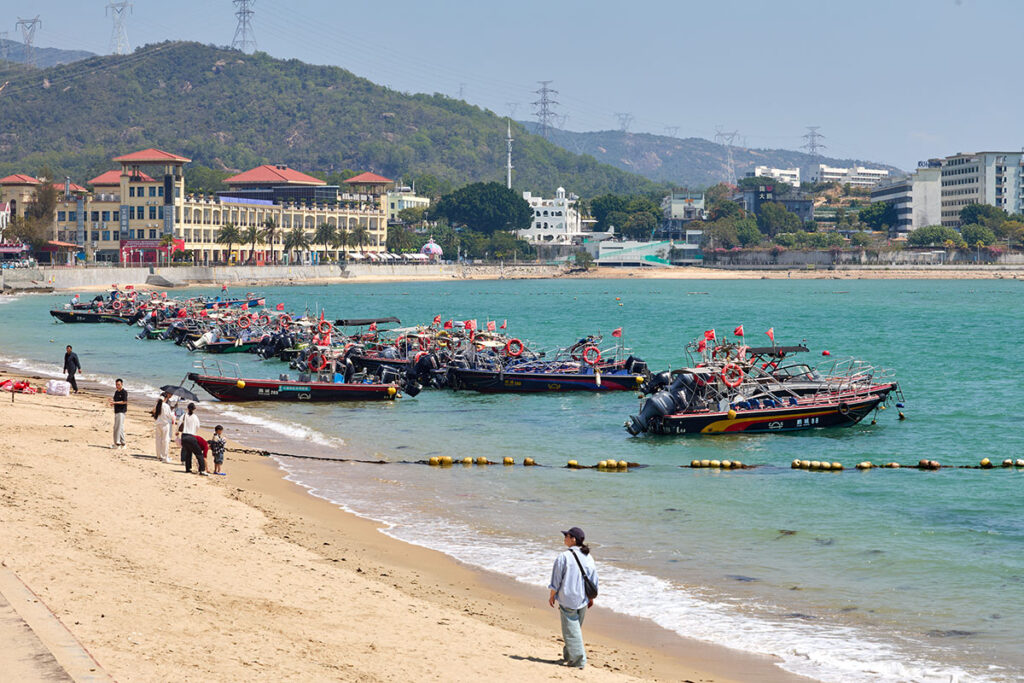
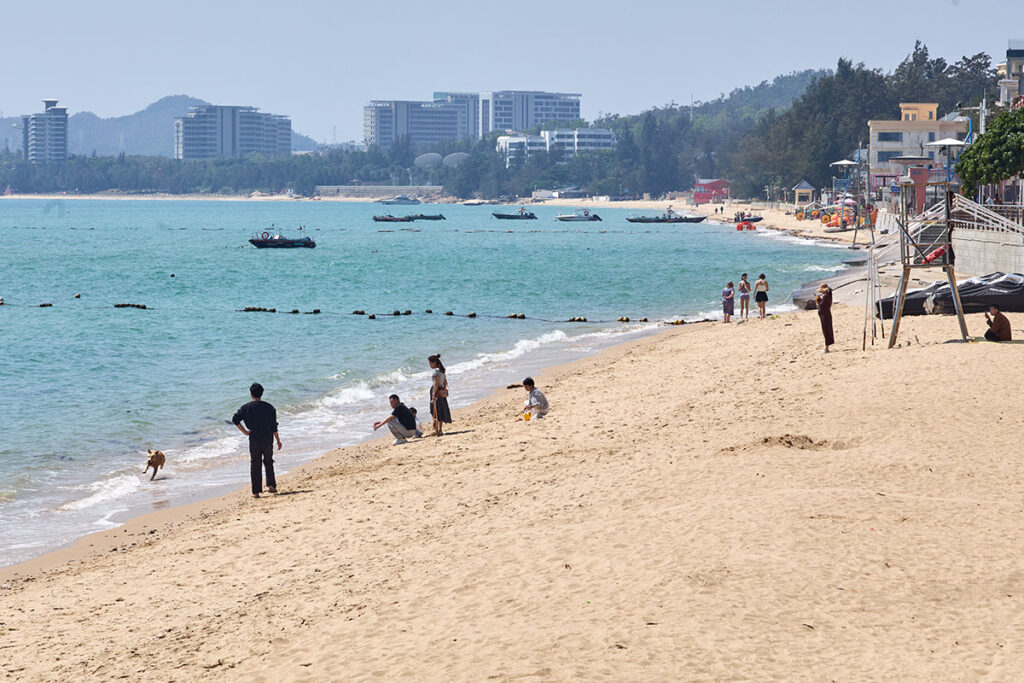
The beach at Jiaochangwei
Beyond the South Gate and across the main road, there is a beach. Here, history is forgotten in favour of a stroll along the promenade with an ice cream or studying the menus of dozens of seafood restaurants.
The area is known as Jiaochangwei and was once used as a training ground for the troops from the fort. Bobbing on the water’s edge is an armada of small boats waiting to whisk tourists on sightseeing excursions around the bay. The beach itself isn’t the most spectacular I’ve seen but children don’t care, so long as they have a bucket and spade, and there are plenty of those for sale along the way.
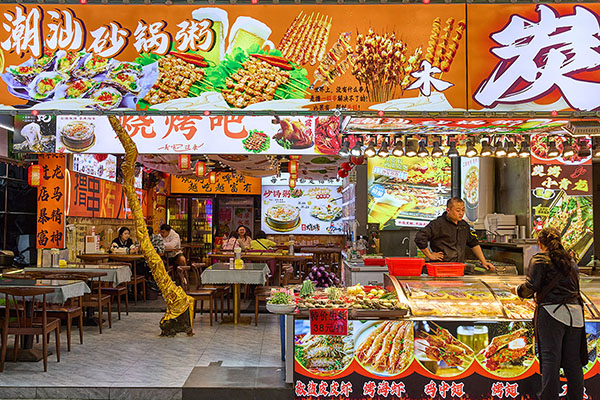
Jiaochangwei bars and restaurants
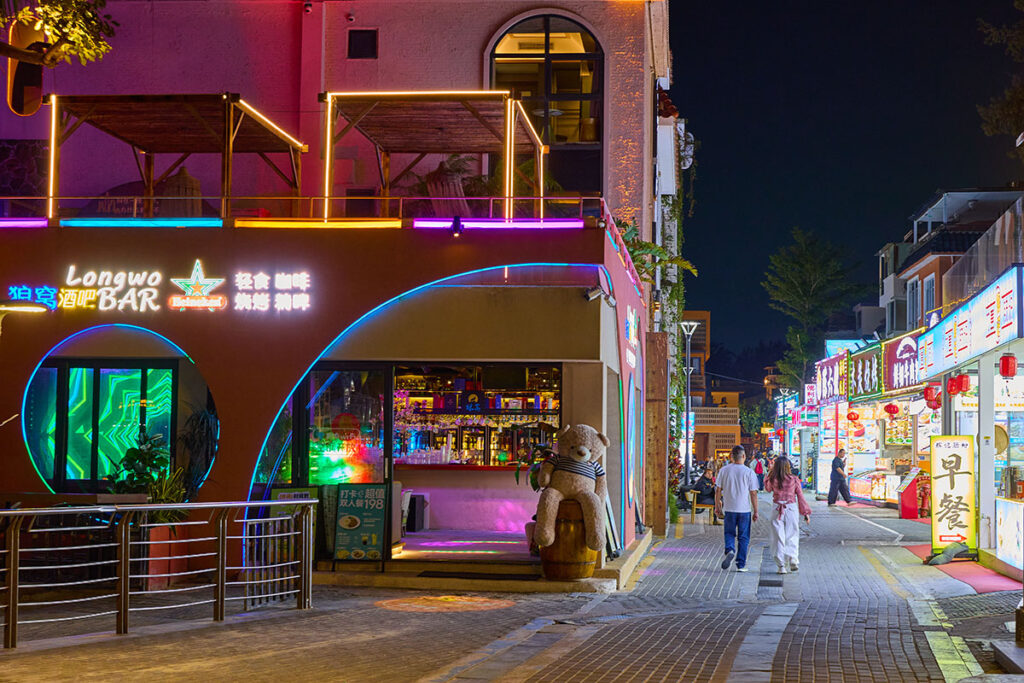
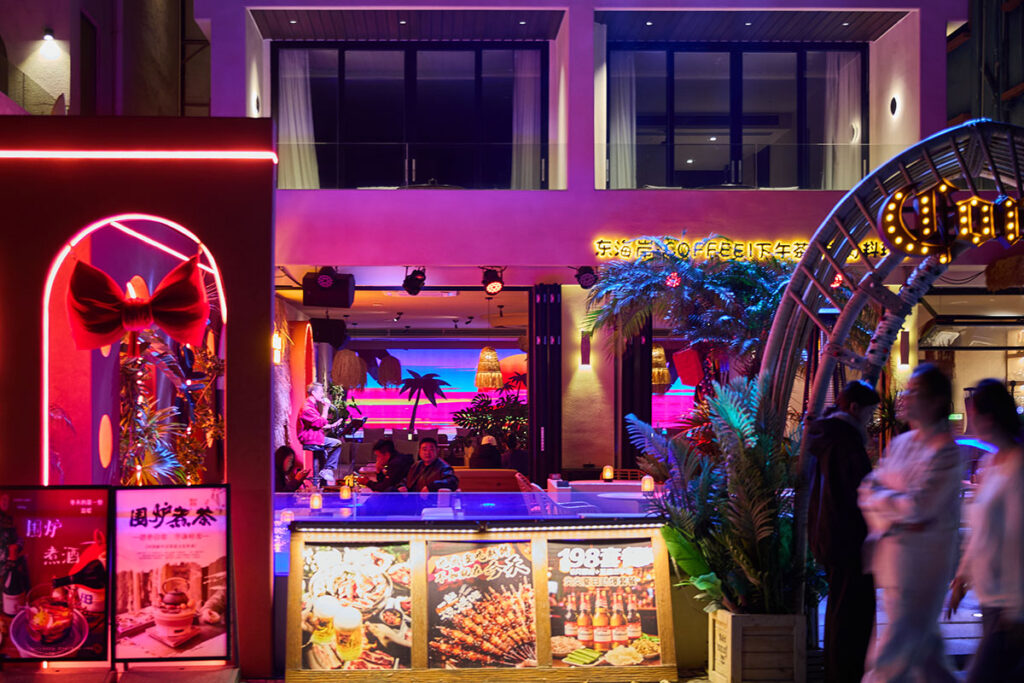
Modern hotels, cool bars, and restaurants line the promenade. Though it did seem quiet on a weekday, I was assured that, at weekends and public holidays, reservations are recommended.
A pleasant afternoon stroll through the east gate of the fortress brought me to the delightful Dongshan Temple, which was founded in the same year as the fortress. According to legend, a feng shui master named Lai Buyi was travelling in the area and saw an auspicious light on Longtou Mountain. After this, he advised the local villagers to build a temple there to protect the region.
The current buildings are a modern reconstruction, as the original structures had suffered a great deal of damage over the years. Nevertheless, on a balmy afternoon, with monks chanting in the main hall, it proved an excellent place for a spot of quiet contemplation. A couplet carved into the wooden pillars at the entrance reads,
There is effect, there is cause; cause has effect; plant what cause, gain what effect.
The mind is Buddha, Buddha is the mind; the mind is Buddha; wish to seek Buddha, first seek the mind.
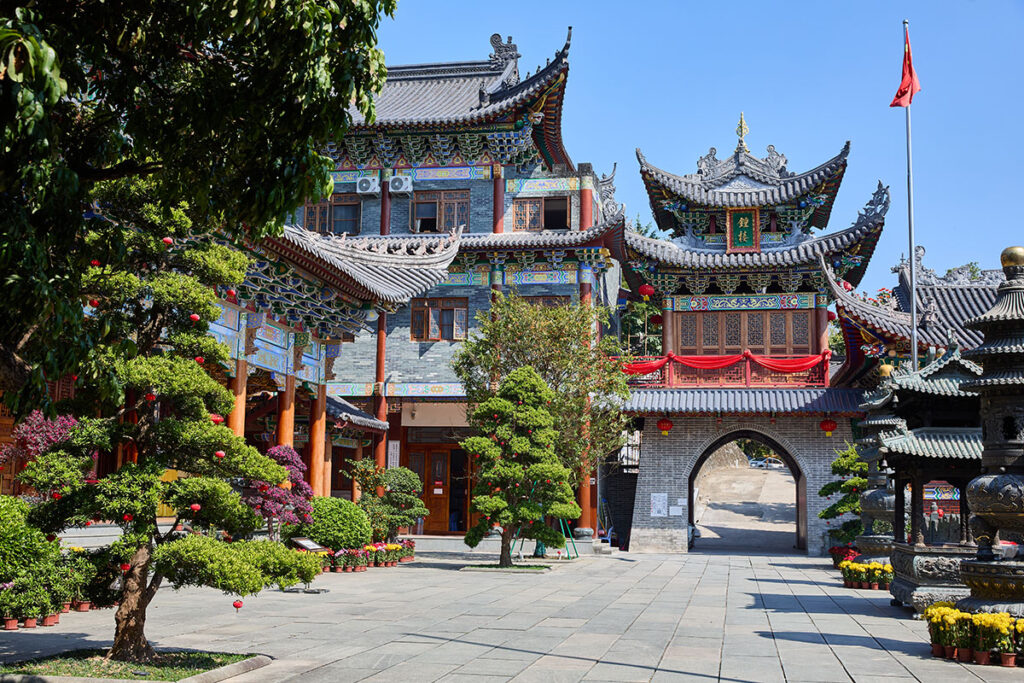
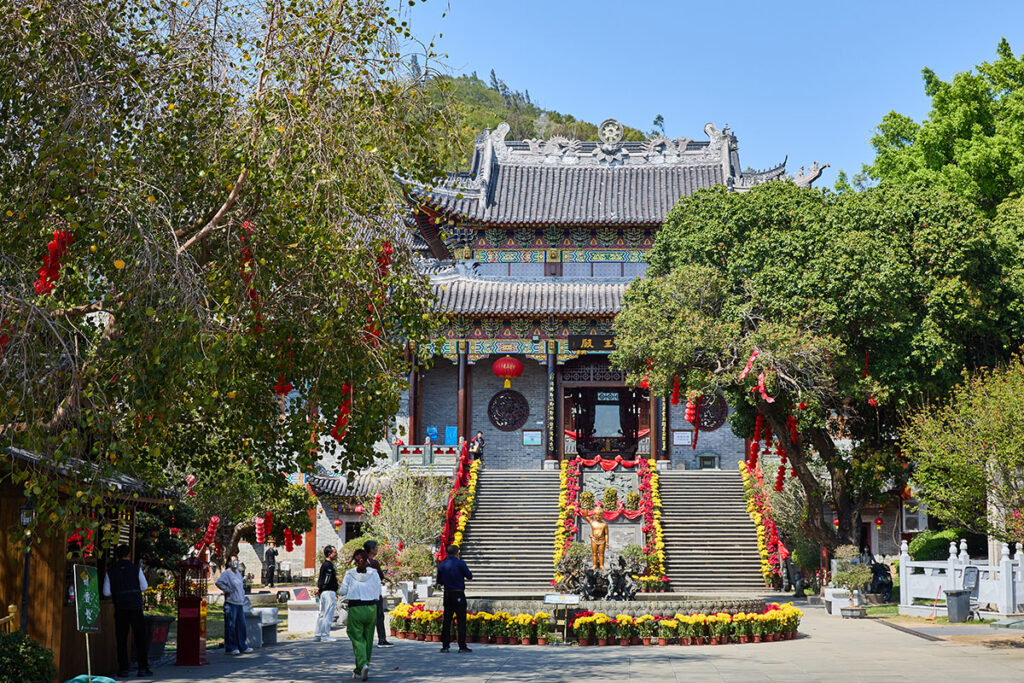
Dongshan Temple
Getting to Dapeng can be an adventure in itself. The easy way is to just take a taxi or hail a Didi. For the budget-conscious, consider using the bus. Take the Shenzhen metro to Chizu station and leave through exit B2. Bear right at the intersection and walk about 230 metres to the bus stop. The E11 will take you as far as Dapeng New Town Bus Terminal 1 (¥10). From there, walk 200 metres along the road to Terminal 2 and take either bus number M457 or M471. Get off at Dapeng Suocheng, the bus will pass the South gate on your left. The E11 will take approximately 60 minutes, the M457 and M471, around 15-20 minutes (¥2).
Where to stay
The Buyan Inn
Liang’s Shuwu Hotel