Hakka history and Han chic
Bringing a touch of colour to the ancient village
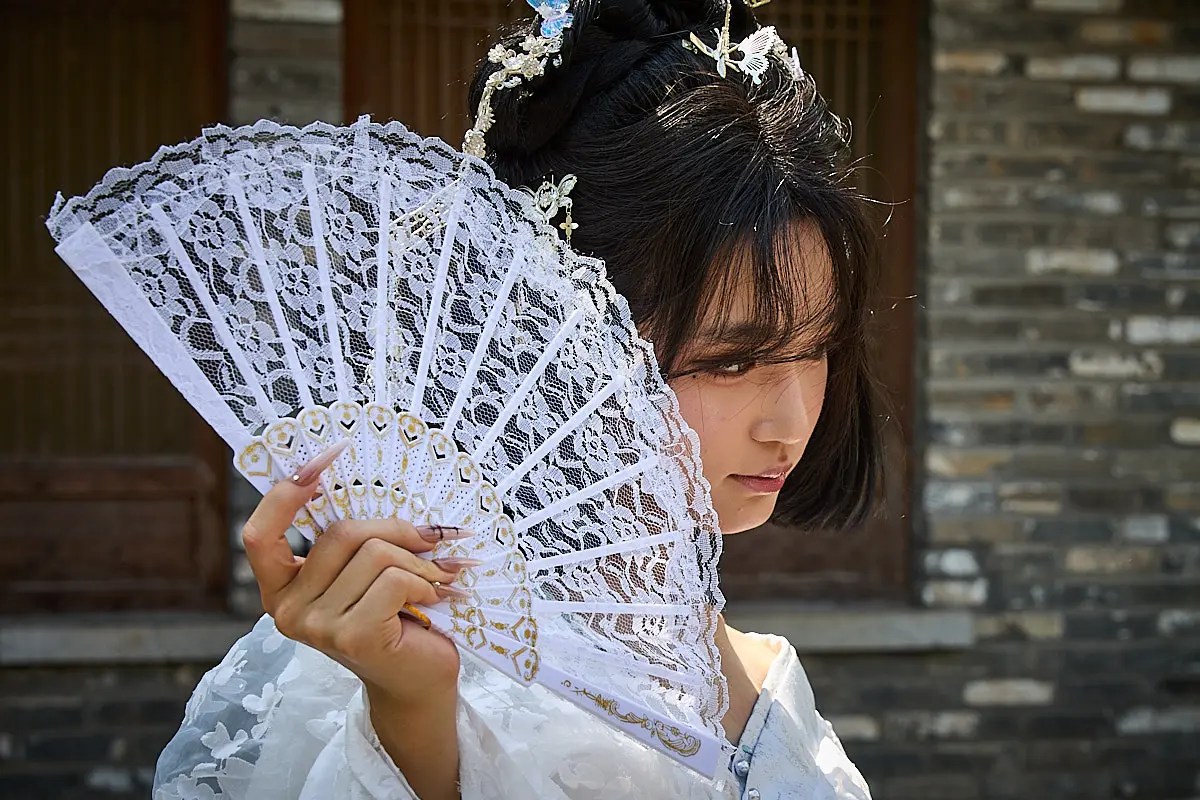
Hakka history and Han chic
Bringing a touch of colour to the ancient village
I’m no fashion photographer, I’ll be the first to admit, but I’m an even worse model. I had to extend myself in both areas at Gankeng Ancient Village. I’d gone there with the intention of exploring a historic site. I hadn’t known the place would also be teeming with young folk dressed in traditional costume. So many, in fact, that it is nearly impossible to take photographs without including them. So I stopped trying and embraced the challenge. In return, several of them asked to include me in their photographs. I hate having my photo taken, but what is sauce for the goose is sauce for the gander, as the saying goes. So I tried to put on my best face and hoped that it wouldn’t damage their expensive phones and camera equipment.
Three-hundred and fifty years ago, Gankeng was a pleasant valley blessed with natural springs and an abundance of oil gan fruit, also known as Indian gooseberry. It was these features that gave the area its name; Gan means sweet or pleasant tasting, and a Keng is a small spring or stream.
It was also these features that attracted Xie Wenming and Zuo Meifa, two Hakka settlers from the Meizhou area in eastern Guangdong. They liked what they found so much that they decided to set down roots. But first, they had to make peace with the original inhabitants, farmers of the Yao ethnic group. With that accomplished to the satisfaction of all parties, the two men set about clearing land for farming, building houses, and encouraging other Hakka families to come and join them. The village flourished.
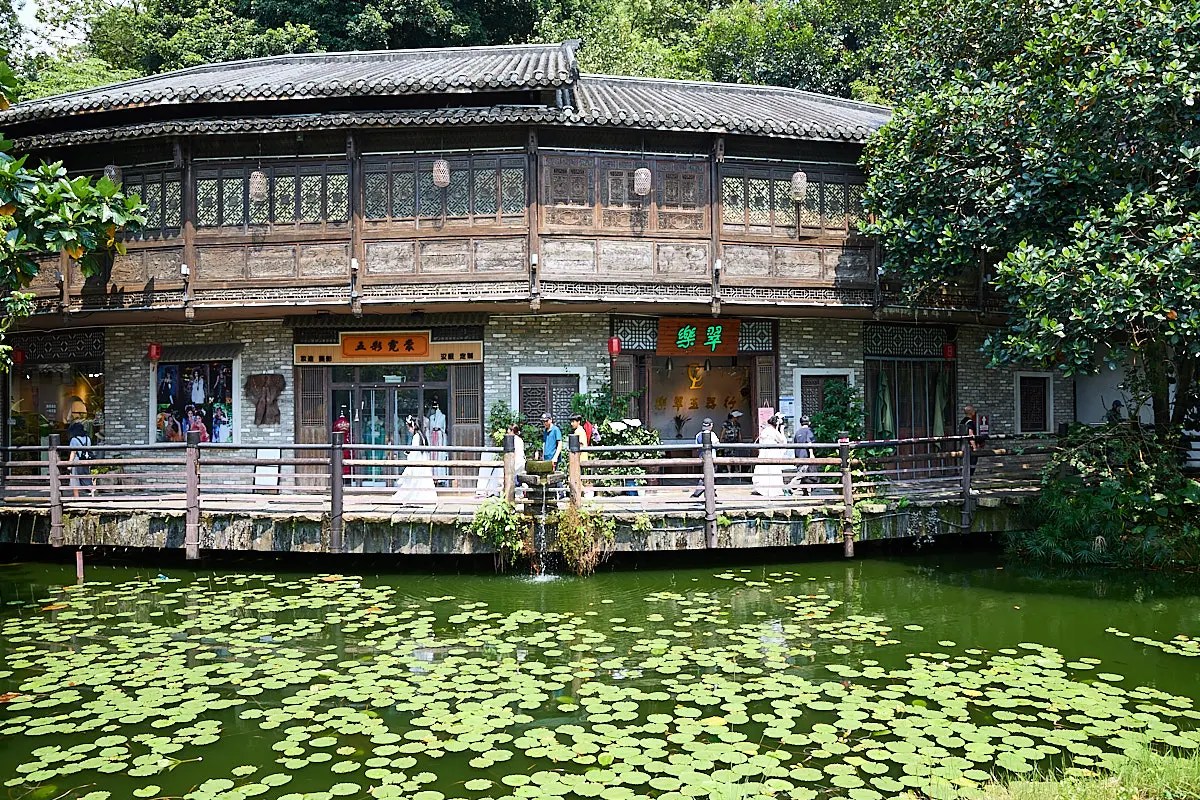
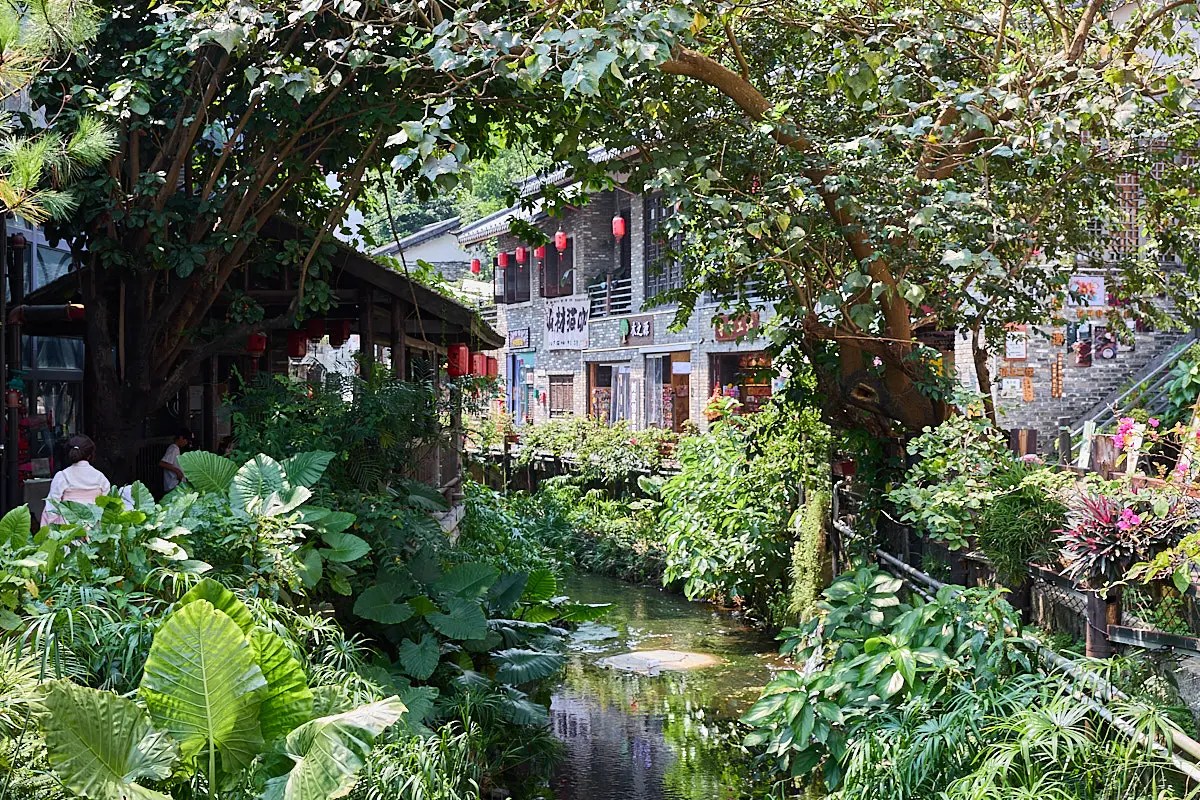
Water town vibes (above) and the Nianxiang Building (below)
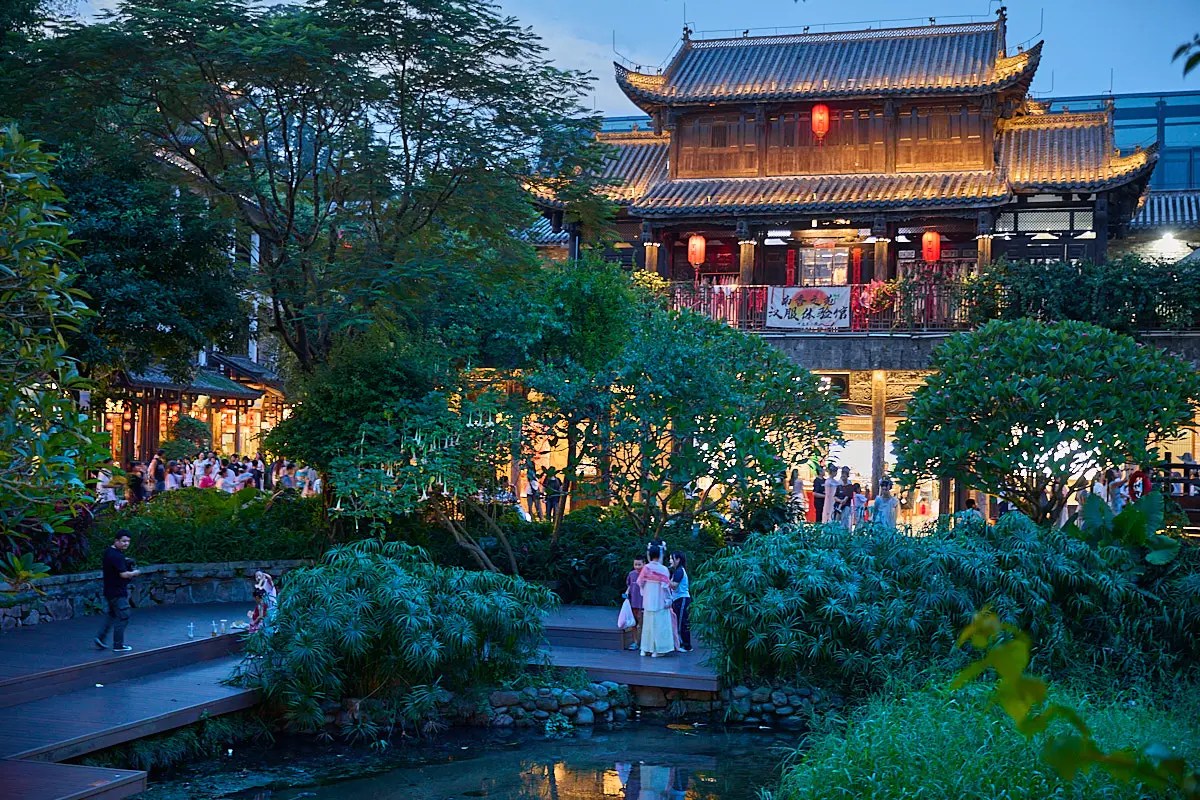
The Hakka, a subgroup of Han Chinese with their own language and traditions, had moved south in several waves. The Gankeng Museum explains these migrations in detail, it also gives a good insight into their way of life, with exhibits of pottery, basket weaving, furniture, and folk song. There is also a fascinating section showing how the village was restored. But if you don’t read Chinese, be sure to have a translation app handy.
It does make me wonder what Xie and Zuo would make of their village now. The small lanes of the old village are still intact. There are no permanent residents anymore, but the restaurants, coffee bars, and craft shops that have opened in some of the old houses are run by descendants of the villagers. The old well now has its own little pavilion along with a statue of a Hakka girl fetching buckets of water. Both are festooned with red ribbons petitioning celestial powers for good luck, wealth, and a happy and healthy life. The stream still passes through what would probably have been fields of rice and vegetables in the past. An old watchtower, a small museum now, still guards the northern side of the old village.
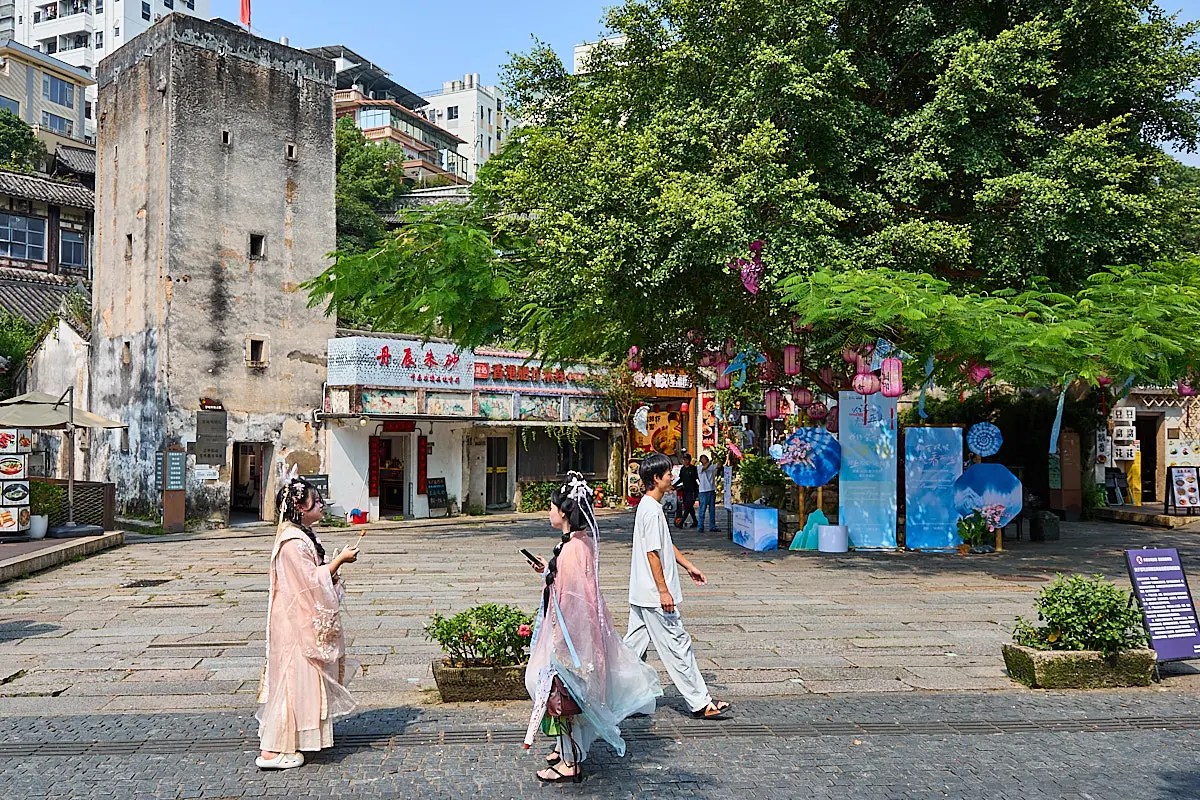
The watchtower (above) and arts and craft shops (below)
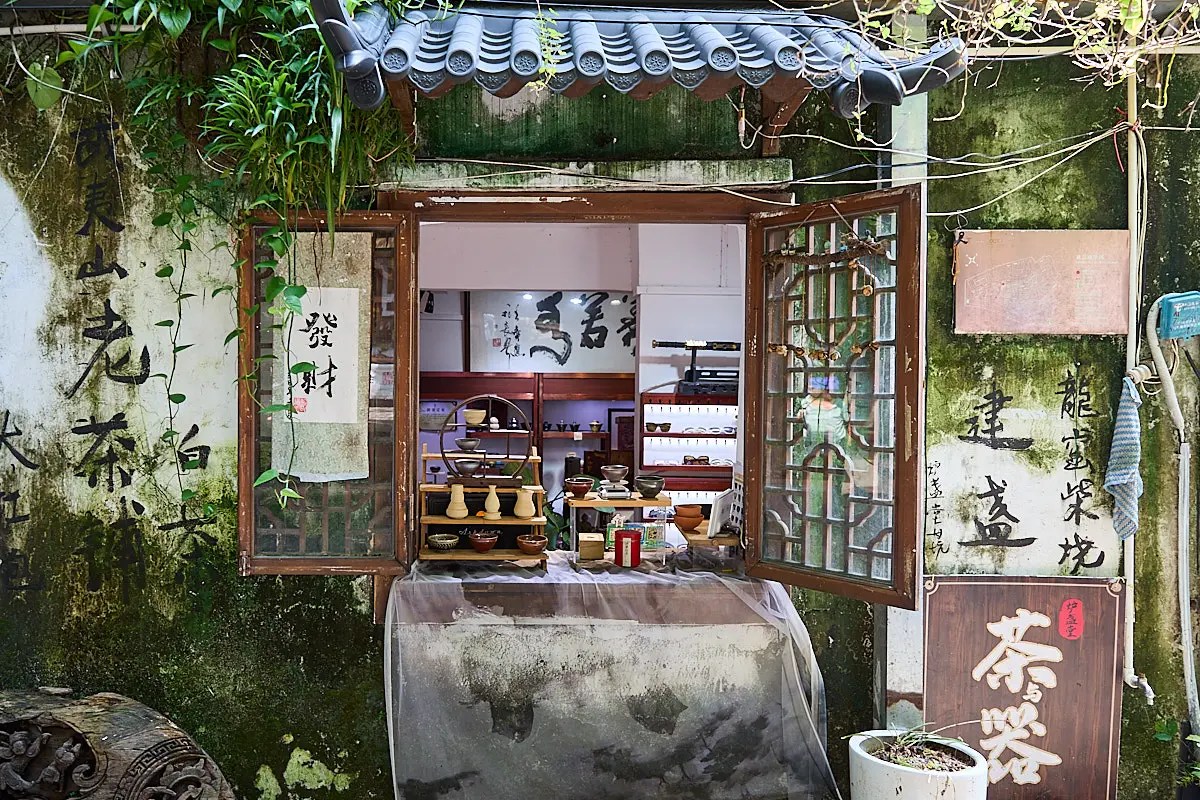
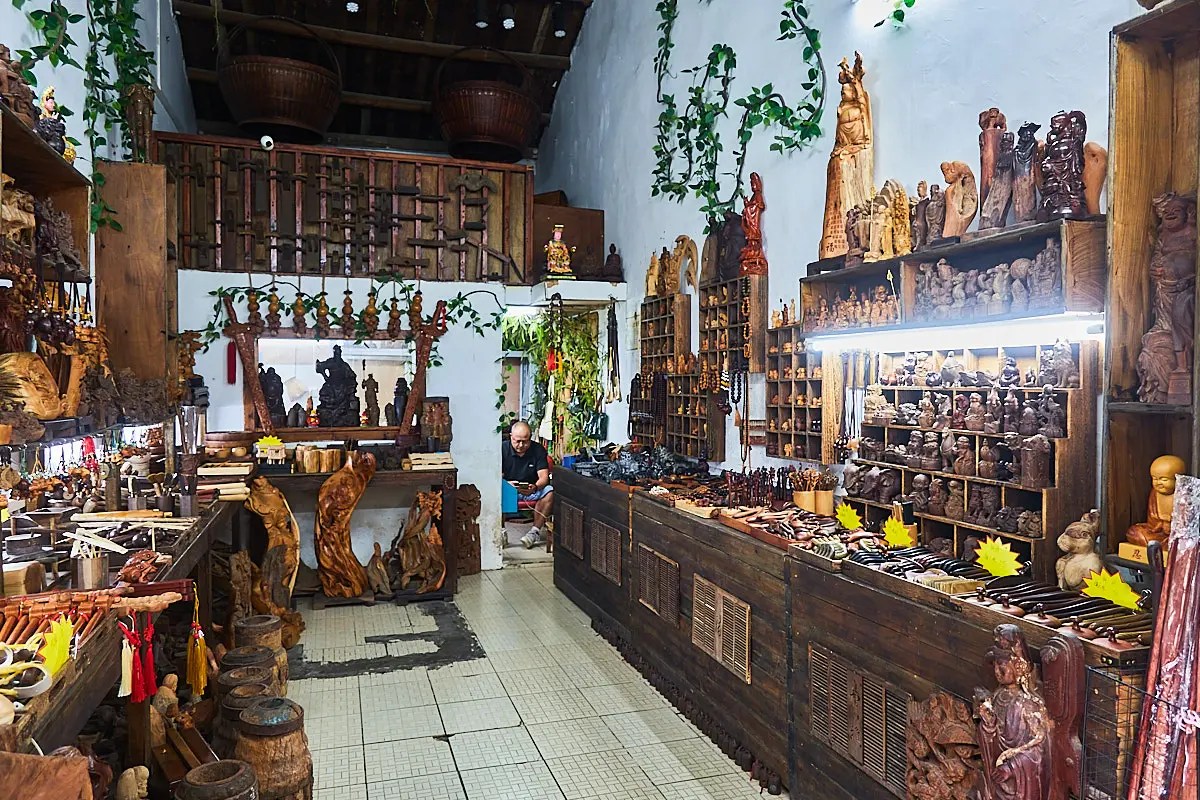
But much has changed, especially since the explosive growth of the city around it took off in the mid-1980s. In 2016, the Overseas Chinese Town Enterprises (OCT Group) took the old village under its wing and embarked on a large-scale revitalisation project. What was already there was carefully preserved, and other, historically significant structures from nearby locations were dismantled and reassembled at Gankeng.
One of the loveliest of these is the 120-year-old Nianxiang Building, a former study hall and library which was brought from Quanzhou in Fujian Province. A shop selling local crafts and jewelry occupies the ground floor, and a hotel adjoins the rear, but it is the structure itself, with its sumptuous wood carvings, that commands most attention. A fact that is not lost on the number of hanfu-clad youngsters who take it in turns to go through their moves in front of it.
One particularly popular spot is on a small boardwalk where a pond has formed. Here, the stream changes course to flow around the side of the building with the hotel to one side and some buildings on stilts along the other, evoking the quiet charm of a water town.
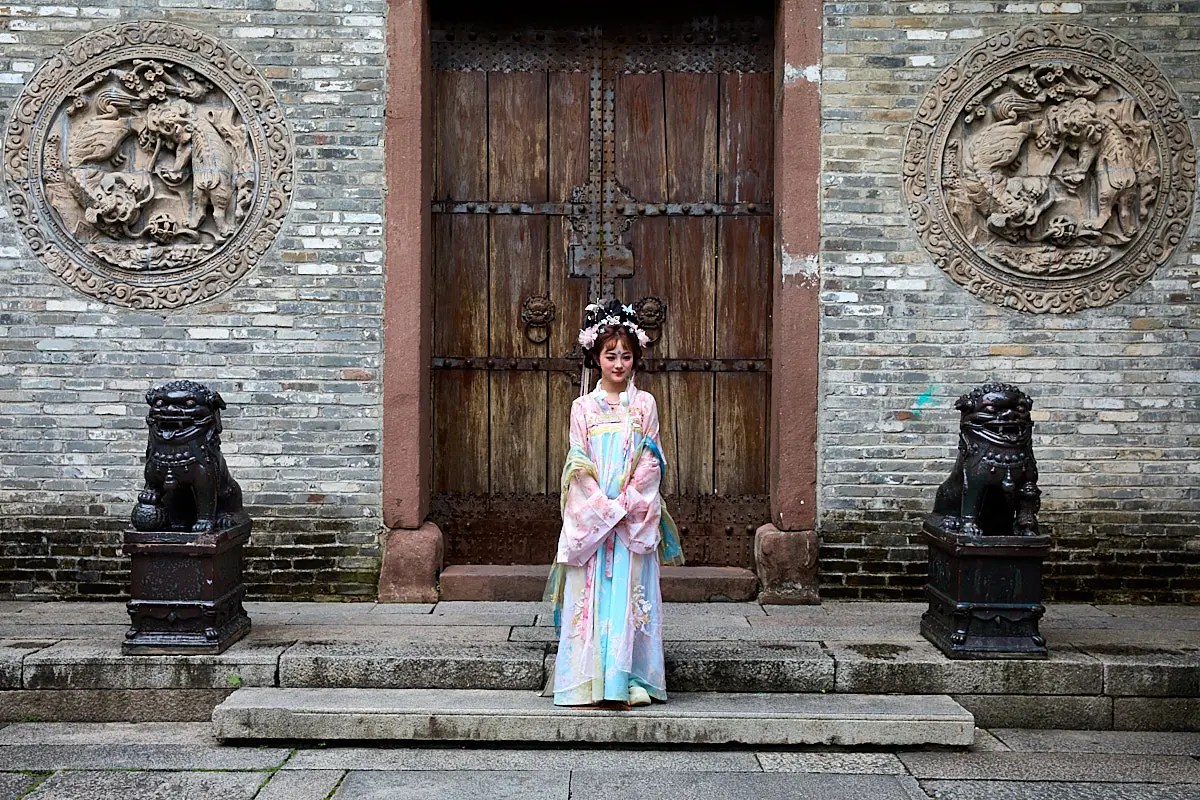
The front of Zhuangyuan Mansion
Another interesting old building that was relocated nearby is the Zhuangyuan Mansion. This was originally built in Jiangxi some 300-years ago and was apparently the home of a scholar from the Liu family, although his full name isn’t known. I’m not sure if this building is open to the public, it wasn’t on my visit, maintenance was being done on one of its three large wooden doors.
One structure that had fooled me completely is the home of the Family Tradition and Family Precepts Museum. This is wrapped around the hillside above the old well, and is actually a new building. It has been designed to blend seamlessly with its surroundings, complete with carvings that look so convincingly antique that I wondered if they had been salvaged from other buildings that could not be saved. Alas, I wasn’t able to find out. Amongst the exhibits are bamboo scrolls and a very early printing press.
Happy in hanfu
Perhaps the most charming aspect of my visits was the number of young people wearing hanfu. The word simply means clothing of the Han. Li Ping, who runs the Man Shi Guang (慢时光) salon, where a variety of styles can be rented, insisted that I, too, would look very fetching in one. It costs about ¥200 for the day. This includes make-up and hairstyling. I don’t have any hair, so I did the world at large a favour by politely declining.
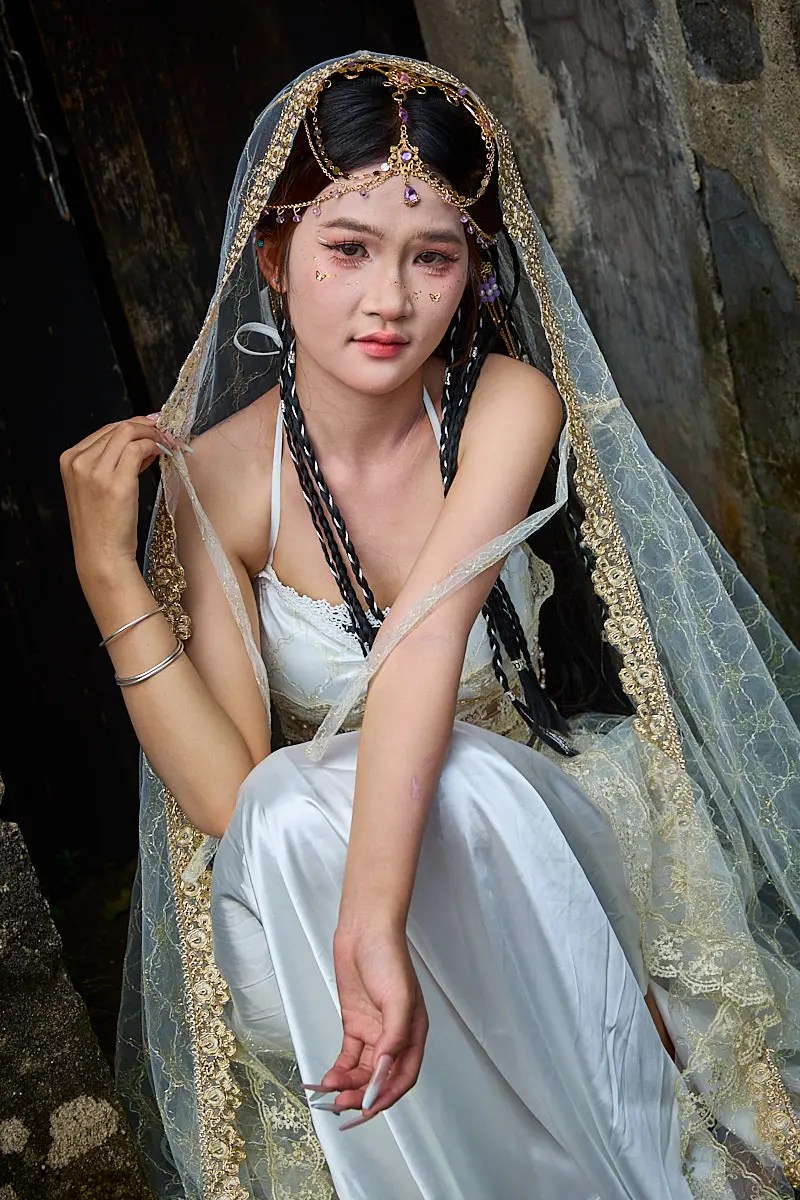
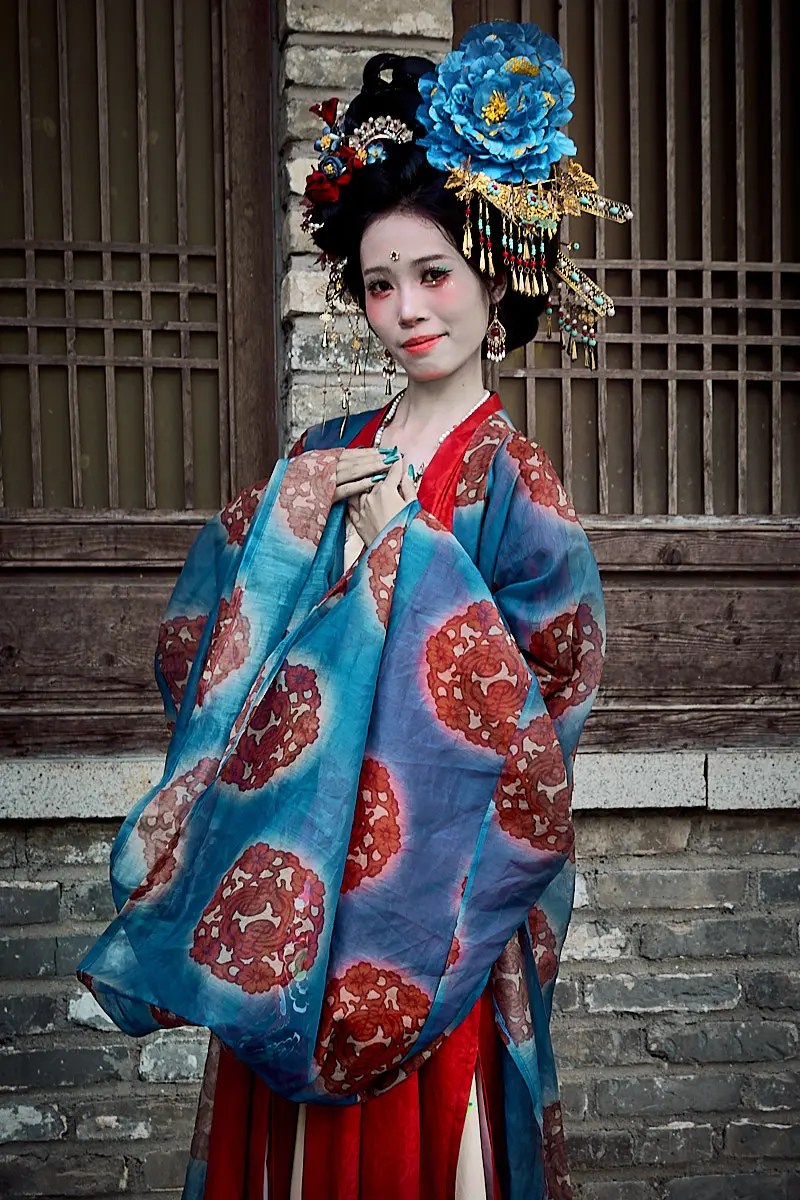

The charm of traditional fashions
Li told me that it is about more than just posing for social media snaps. Dressing in pretty clothes and posing is always fun, but it is also very much about feeling a connection to the past and celebrating the culture and heritage. Even though, in some cases, the colourful robes are augmented with fluffy rabbit or cat ears. Its huge popularity is obvious from the sheer number of businesses offering their services to both men and women of all ages. Many of the participants also hire professional photographers to commemorate their visit, and were kind enough to allow me to take a few shots on the side.
The Renaissance probably began more than 20-years ago after a man in Zhengzhou, Henan province, was photographed in public wearing his own hand-made traditional shenyi robes. But it wasn’t an overnight sensation. Others gradually got into it as a hobby, but it remained quite low-key until around 2018, when social media platforms got a hold of it. Since then, its popularity has ballooned so much that by 2025, China’s traditional clothing market was worth over ¥20 billion (US$2.85 billion).
With head and heart amply fed, the sun dipping low in the sky, it is time to feed the stomach and fortify myself for the journey home. There are eateries to suit all pockets and paletes but I make a beeline, through an impressive teak archway, to the red and orange lanterns and street food snacks of Ganwei Alley.
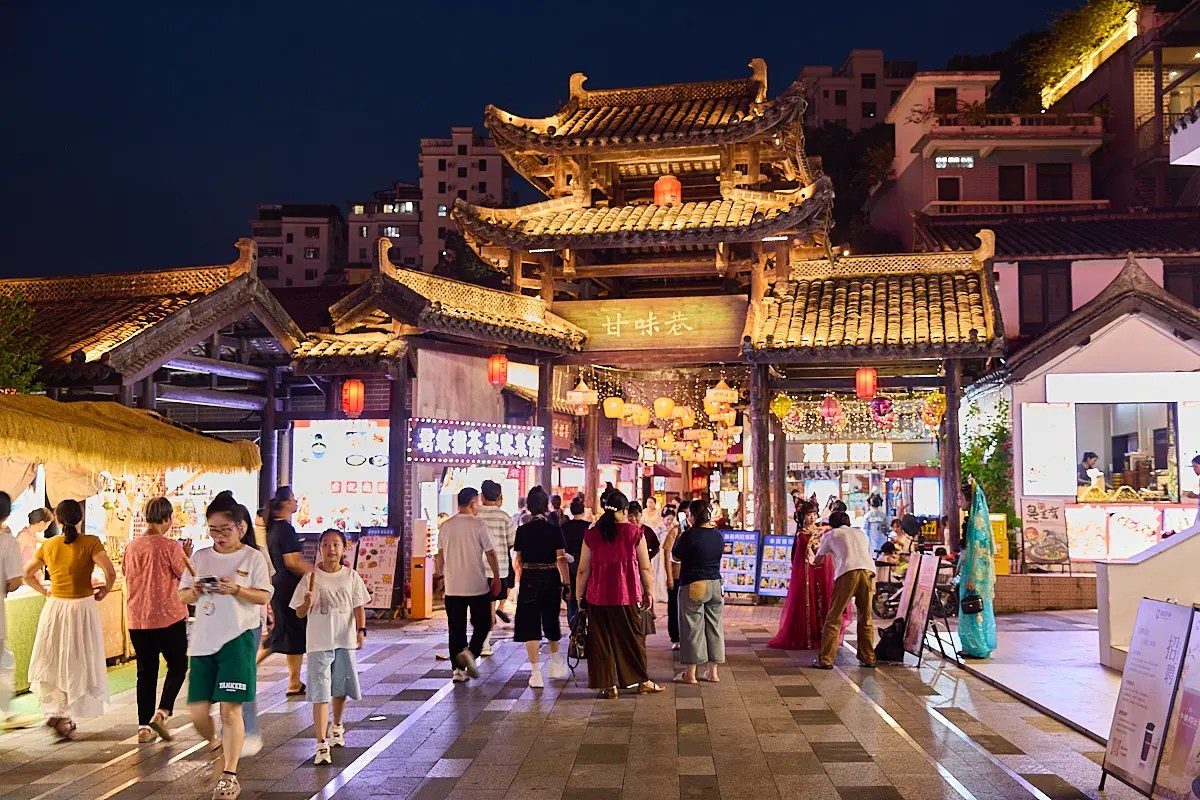
Ganwei Alley
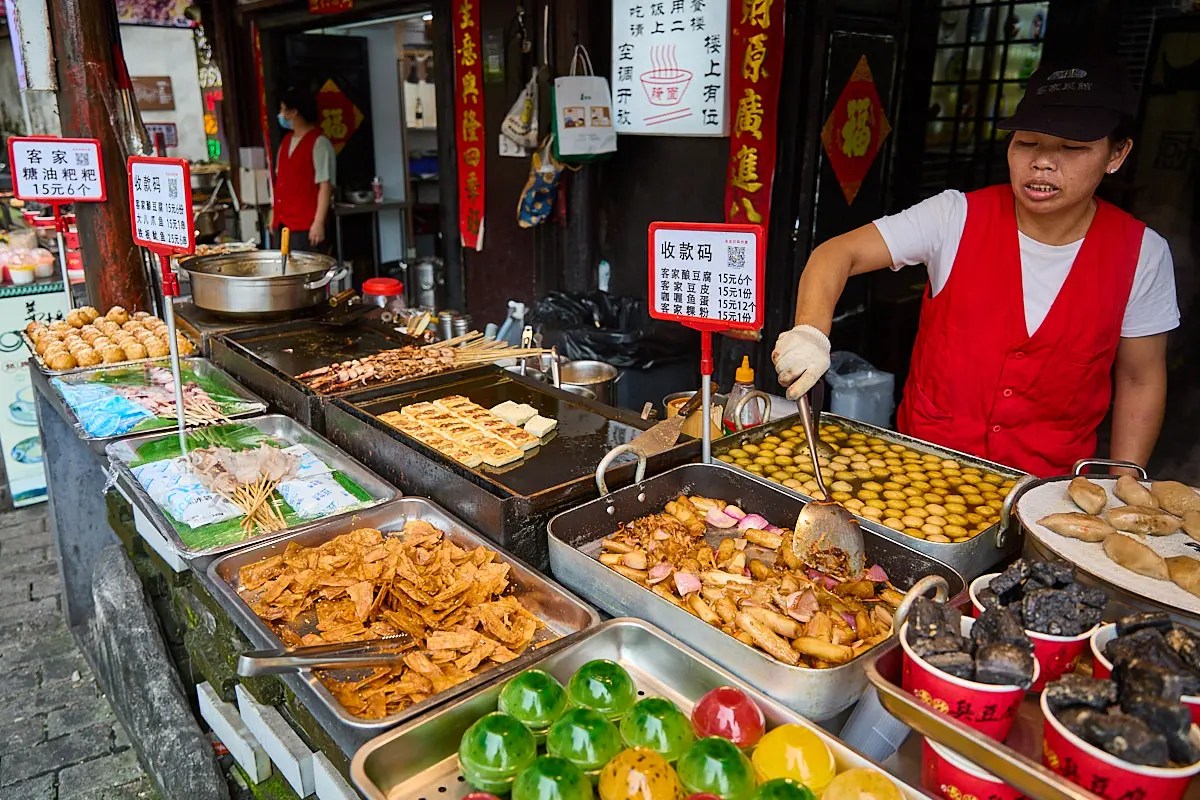

Braised tofu stuffed with minced pork is a must, though there are unstuffed versions for vegetarians. Other snacks include lei cha, a pounded green tea sauce that is usually served over rice or noodles with vegetables, salt-baked chicken, and rice cakes that can have either a sweet or savoury filling. If truth be told, I had grazed here for an early lunch before setting off to explore the village and to work up another appetite.
Gankeng is on Line 10 of the Shenzhen metro. Leave the station via Exit B, and the village is a 10-minute walk up the road.
Hotel Suggestion
Nanxianglou Art Hotel, Gankeng
Related: A 600-year-old fort near Shenzhen